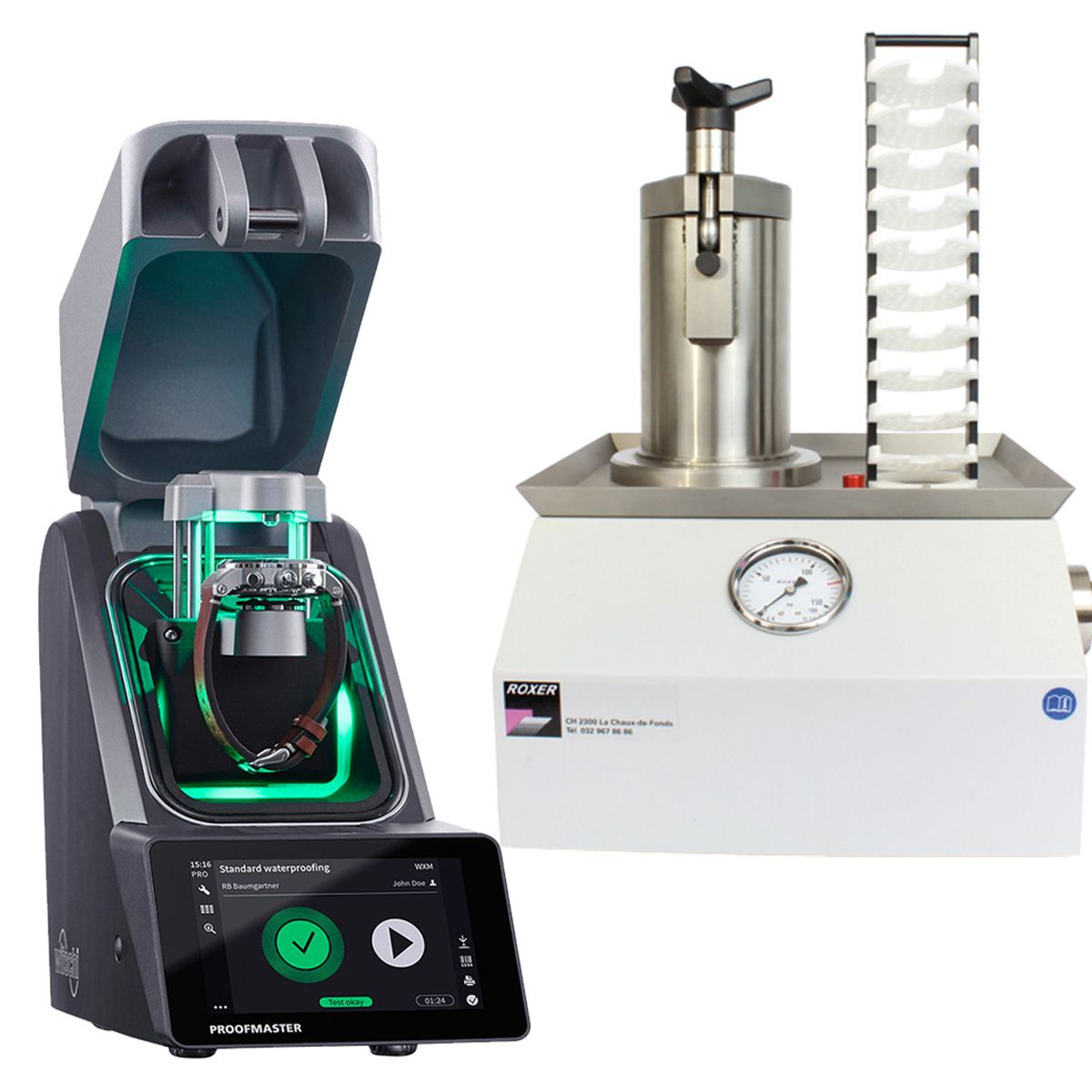
Water test for your watch, normally we have wet
test and dry pressure test, in most of the cases we use dry pressure test because
of its simple operation. It takes a couple of minutes to get the job done.
How Wet Pressure Testers Work
- Preparation: The watch is
placed on a hook inside the cylinder, and the cylinder is filled with
distilled water.
- Pressurization: The
lid is tightened and air pressure is pumped into the chamber to simulate a
certain depth (e.g., 3-5 bar).
- Soak Time: The watch stays in
the pressurized environment for about 1 minute. If a leak exists, air
forces its way into the watch.
- Release & Observation: The
operator releases the pressure and immediately submerges the watch into
the water.
- Leak Detection: If
the watch is not watertight, the air that entered earlier will escape,
creating a visible stream of bubbles.
How Dry Pressure Testers Work (Vacuum Testing)
- Air Testing: Known as a dry
tester, this method uses a sealed chamber with air instead of water.
- Deformation Sensor: A
sensitive sensor rests on the watch crystal. The machine creates a vacuum
to pull air out or pressure to push it in.
- Measurement: The sensor
measures the microscopic expansion or contraction of the watch case. If
the case does not change shape, the machine knows the air has leaked
inside, signaling a broken seal.
Advantages
- Safety: Dry tests ensure
the watch does not get wet during testing.
- Accuracy: Wet tests are
superior for verifying that the watch holds up to specific pressures.
- Safety Check: This
is crucial after any battery change or service to ensure the gaskets are
properly seated.
If we want to ensure where the leakage is. Most
professional watchmakers use a combination of both tests to ensure the
integrity of the watch, often looking for leaks through bubbles (wet) or by
monitoring for pressure drops within the testing chamber (dry).
Water test for your watch, normally we have wet
test and dry pressure test, in most of the cases we use dry pressure test because
of its simple operation. It takes a couple of minutes to get the job done.
How Wet Pressure Testers Work
- Preparation: The watch is
placed on a hook inside the cylinder, and the cylinder is filled with
distilled water.
- Pressurization: The
lid is tightened and air pressure is pumped into the chamber to simulate a
certain depth (e.g., 3-5 bar).
- Soak Time: The watch stays in
the pressurized environment for about 1 minute. If a leak exists, air
forces its way into the watch.
- Release & Observation: The
operator releases the pressure and immediately submerges the watch into
the water.
- Leak Detection: If
the watch is not watertight, the air that entered earlier will escape,
creating a visible stream of bubbles.
How Dry Pressure Testers Work (Vacuum Testing)
- Air Testing: Known as a dry
tester, this method uses a sealed chamber with air instead of water.
- Deformation Sensor: A
sensitive sensor rests on the watch crystal. The machine creates a vacuum
to pull air out or pressure to push it in.
- Measurement: The sensor
measures the microscopic expansion or contraction of the watch case. If
the case does not change shape, the machine knows the air has leaked
inside, signaling a broken seal.
Advantages
- Safety: Dry tests ensure
the watch does not get wet during testing.
- Accuracy: Wet tests are
superior for verifying that the watch holds up to specific pressures.
- Safety Check: This
is crucial after any battery change or service to ensure the gaskets are
properly seated.
If we want to ensure where the leakage is. Most
professional watchmakers use a combination of both tests to ensure the
integrity of the watch, often looking for leaks through bubbles (wet) or by
monitoring for pressure drops within the testing chamber (dry).
Paul Ip